AI Search Is Changing SEO in 2026: Here's How to Stay Visible
SS
For years, SEO followed a fairly predictable formula. You researched keywords, created content around those keywords, optimized your pages, built backlinks, and gradually improved your rankings. While the process was never easy, marketers generally understood the rules of the game.
In 2026, those rules are changing.
The rise of AI-powered search experiences is fundamentally altering how people discover information online. Users are increasingly turning to tools like ChatGPT, Google AI Overviews, Gemini, Claude, and Perplexity to get direct answers instead of browsing through multiple websites.
This shift in behavior is creating one of the biggest disruptions the search industry has seen since Google became the dominant search engine.
Many businesses are already noticing the impact. They are maintaining their rankings but receiving fewer clicks. Some are publishing more content than ever while seeing slower traffic growth.
Others are finding that competitors with smaller websites are gaining visibility because their content is being referenced by AI-generated answers.
This is why understanding AI-driven SEO 2026 is becoming essential for marketers, business owners, and content creators.

The Biggest Change Isn't AI—It's User Behavior
Most discussions about SEO focus on algorithms, but the real story is user behavior.
Think about how you searched for information five years ago. If you wanted to learn about email marketing, buying a house, or starting a business, you would typically open Google, review several search results, visit multiple websites, compare information, and then form your own conclusion.
Today, many users skip that process entirely.
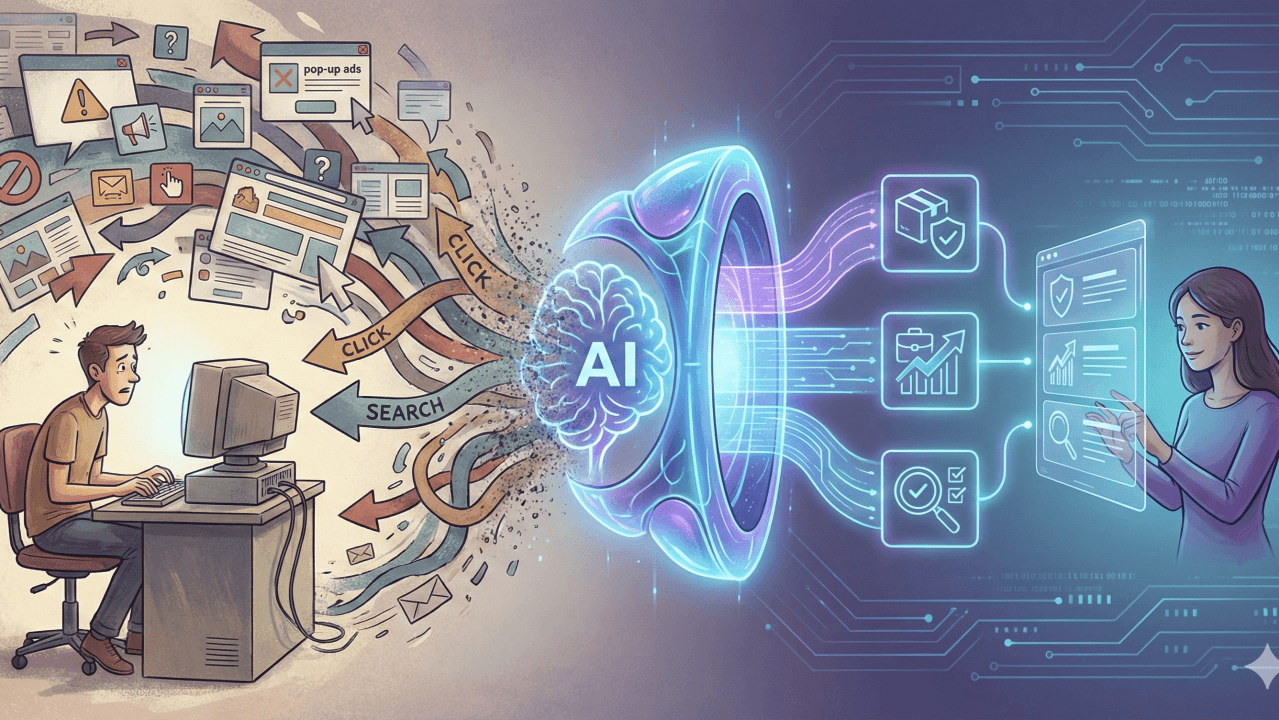
Instead, they ask an AI assistant a question and receive a summarized answer within seconds. The AI gathers information from multiple sources and presents it in a way that feels conversational and easy to understand.
As a result, people are clicking fewer links for informational searches.
This doesn't mean websites are becoming irrelevant. It means users are becoming more selective about which websites they visit. If an AI-generated summary answers 80% of their question, they will only click through when they need deeper insights, expert opinions, real-world examples, or services they are considering purchasing.
This behavioral shift is having a significant impact on SEO.
How AI Search Overviews Affect SEO
One of the most important developments is Google's AI Overviews. These AI-generated summaries now appear above traditional search results for many informational queries.
To understand how AI search overviews affect SEO, imagine a user searching for "How much should a small business spend on marketing?"
In the past, Google would display a list of articles. Today, Google may provide a detailed AI-generated answer that includes average budgets, recommended percentages, and key considerations before the user clicks on any website.
This creates a challenge for publishers because ranking on page one no longer guarantees traffic.
Businesses are beginning to see situations where impressions remain stable or even increase while click-through rates decline. Their content is still visible, but users are consuming information directly within the search results.
For marketers, this means success can no longer be measured solely by rankings. Visibility, brand recognition, and authority are becoming equally important.

Why Traditional SEO Tactics Are Losing Effectiveness
Many SEO strategies developed over the last decade were designed for search engines that relied heavily on keywords and backlinks. While these factors still matter, they are no longer enough on their own.
Publishing dozens of low-quality articles targeting slight keyword variations is becoming less effective. AI systems are increasingly capable of understanding context, intent, and content quality.
For example, a website might have separate articles targeting:
- Best CRM for small businesses
- Best CRM software
- Top CRM platforms
- CRM tools for startups
An AI system can recognize that these topics overlap significantly. Instead of rewarding multiple similar articles, it may prefer a single comprehensive resource that answers the user's questions more effectively.
This is one reason why many content-heavy websites are struggling despite producing large volumes of content.
Quality, expertise, and originality are becoming more important than quantity.
The Rise of AI-Driven SEO 2026
The term AI-driven SEO 2026 is often misunderstood. Many people assume it refers to using AI tools to create content. In reality, it is about adapting SEO strategies to a world where AI influences how information is discovered and presented.
The most successful websites today are focusing on becoming trusted sources rather than simply ranking for keywords.
They are investing in:
- Original research and data
- Detailed case studies
- Expert commentary
- Industry-specific insights
- Thought leadership content
- Strong brand recognition
AI systems are designed to identify authoritative and trustworthy information. Content that offers unique value is more likely to be referenced, cited, or recommended.
A generic article that repeats information already available on hundreds of websites provides little reason for either users or AI systems to prioritize it.
Why Behavioral SEO Strategy 2026 Matters
One of the most important trends emerging today is the concept of a behavioral SEO strategy 2026.
Search engines have always tried to understand whether users find content helpful. However, advances in AI are allowing search platforms to evaluate user satisfaction more effectively than ever before.
Behavioral signals include factors such as:
- How long visitors stay on a page
- Whether they continue exploring the website
- How often they return
- Whether they search for the brand again
- Content sharing and engagement
- Overall user satisfaction
These signals help search engines determine whether content genuinely solves a user's problem.
This means marketers should focus less on trying to manipulate rankings and more on creating experiences that users find valuable.
If visitors quickly leave your website because the content is generic, outdated, or difficult to read, no amount of keyword optimization can compensate for that.
What Marketers Should Do Right Now
The good news is that the future of SEO is not necessarily more complicated. In many ways, it is becoming more aligned with good marketing principles.
First, focus on creating content that demonstrates real expertise. Share experiences, lessons learned, industry observations, and practical examples that cannot be easily replicated.
Second, invest in building your brand. Companies with strong brand recognition are more likely to earn trust from both users and search platforms.
Third, prioritize content depth over content volume. One exceptional article often provides more value than ten average ones.
Fourth, diversify your traffic sources. Relying entirely on Google traffic has always been risky. Email marketing, social media, communities, partnerships, and direct brand searches are becoming increasingly important.
Finally, pay close attention to user engagement metrics. Understanding how visitors interact with your content can provide valuable insights into what is working and what needs improvement.
The Future of SEO Is Trust
The narrative that "AI is killing SEO" is misleading.
What AI is actually doing is accelerating a shift that has been happening for years. Search engines have always wanted to deliver the best possible answers. AI simply helps them do that more efficiently.
The websites that will thrive in the coming years are not necessarily the ones publishing the most content or targeting the most keywords. They will be the ones that build trust, demonstrate expertise, and provide genuine value to their audiences.
Understanding how AI search overviews affect SEO, adapting to AI-driven SEO 2026, and implementing a strong behavioral SEO strategy 2026 will be critical for businesses that want to remain visible in an increasingly AI-powered search landscape.
SEO is not disappearing. It is evolving. The marketers who adapt early will have a significant advantage over those still relying on strategies designed for a very different internet.